
Mercedes might have found a clever engine trick for 2026, but they’re not the first team to exploit F1’s rulebook. Let’s look at the most famous loopholes that changed the sport.
The Mercedes team has reportedly discovered a way to get around the new compression-ratio limit coming in 2026. They’ve realized that since engine checks happen at room temperature rather than when the engine is running, they can use materials that expand when hot to effectively bypass the rules.
This could give them a significant horsepower boost – and a real edge over their competitors.
F1’s history is full of these “creative interpretations” of the rules, with some leading to complete dominance for the teams clever enough to find them. The last 15 years show this pattern perfectly.
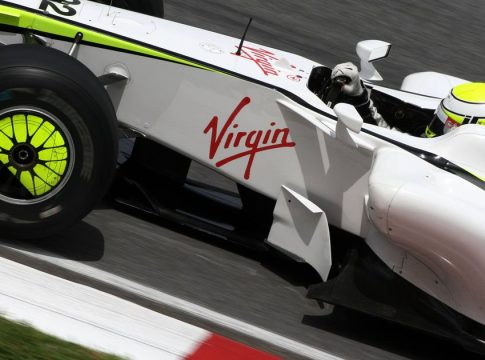
## 2009: Brawn GP’s double diffuser trick
This might be the most famous F1 loophole ever. Ross Brawn bought Honda’s team for just £1 when they left the sport – a bargain that would change F1 history.
The Brawn engineers found a way to create a second expansion plane in their diffuser by using holes that were supposed to be for structural and cooling purposes as aerodynamic channels instead.
What did this actually do? It made air flow faster under the car, sealed the floor better, and gave them much better stability in corners.
In a season without DRS and with tires that really responded to downforce, this advantage was huge. They got more downforce without any drag penalty.
Other teams complained loudly, but the FIA ruled it legal. The loophole would only be closed for 2010, giving Brawn a season to capitalize on their clever design.
## 2010: McLaren’s F-duct system predates DRS introduction
McLaren came up with something truly ingenious with their F-duct system. It let drivers stall the rear wing on straights by simply covering a small hole in the cockpit with their hand or knee.
When they blocked this hole, airflow was redirected to the wing, disrupting the normal flow and causing a sudden drop in downforce.
This was basically a manual version of DRS before DRS existed. It gave McLaren’s cars a big speed advantage on straights without sacrificing performance in corners.
The FIA let them use it for 2010 but banned it from 2011 when they introduced DRS.
## 2019: Ferrari’s SF90 engine delivers unrivalled straight-line speed
Ferrari struggled in the first half of 2019, but after summer break, their cars suddenly became rockets on the straights. This power boost helped Charles Leclerc win his first two F1 races back-to-back at Spa and Monza.
Their engine seemed to have dozens more horsepower than Mercedes or Red Bull, raising serious questions from their rivals.
The most likely explanation? Ferrari found a way to exploit the fuel-flow sensor by injecting extra fuel in tiny intervals without exceeding the average measurement. This gave them more power without technically breaking the rules.
The FIA responded with a Technical Directive clarifying that fuel flow couldn’t exceed limits at any time, and added a second sensor. Ferrari’s performance immediately dropped.
In February 2020, the FIA announced a secret agreement with Ferrari. The team’s engine advantage disappeared, and they went on to have one of their worst seasons in recent memory without a single win.
## 2024: flexi-wing controversy erupts in Formula 1
The most recent loophole drama involved McLaren and their flexible wings, which became a hot topic after onboard footage from Piastri and Norris caught everyone’s attention in Azerbaijan.
The issue? While F1 mandates rigid wings that pass static deflection tests, McLaren’s rear wings behaved differently on track under real-world conditions.
Their wing passed every FIA test in the garage but gradually changed shape on straights, reducing drag and increasing top speed. When the drivers braked for corners, the wing would return to its normal position, giving back the downforce.
It was essentially a passive DRS system without any moving parts or mechanisms. The FIA responded by making their tests tougher and updating their rules throughout the season.
Want to stay up-to-date with what happens in the F1 paddock? Then GPblog’s F1 Paddock Update video is the perfect way to do it. Subscribe to GPblog’s YouTube channel and turn on notifications to never miss the latest episodes.

